

History of the Herbal
During the Middle Ages, monastery's were the medicine keepers, compiling herbals and keeping medicinal gardens for the people as a whole. Plants that were traditionally from these gardens have the binomial name of "officinalis", meaning they were "belonging to" the monastery storeroom.

Later in the 17th century these "storerooms" expanded to the "English Housewife's" home. Nicholas Culpeper's, The English Physician, was written for the common people and used in many households that they "might happily be preserved if they knew but what the Herbs in their own Gardens were good for."
"Just as women today will keep a scrapbook for recipes into which they past newspaper cuttings, or copy recipes picked up from a friend or favorite magazine, so the seventeenth-century housewife, in her time, collected useful medical tips from any number of sources. A good reliable herbal - like a sound basic cookery book - was the first essential for the young housewife." - Green Pharmacy, p.86
The English women brought their herbals and seeds from their medicine gardens to the New World where Native American's had an their own oral herbal that was passed down from generations. Those that were open to the teachings of the indigenous people added to their herbals the native medicines growing in America.
Over time herbals combined with botanical nature journals that were filled with pressed plants, poetry, drawings, ribbons and decorative elements and observations of plants. Today there are so many ways to creatively design and keep your own personal herbal. I will give you a few ideas and templates to start you on your own journey of discovering God's gift of plant medicine.

-
Common Name - name you know the plant by
-
Binomial Name - universal name
-
Family
-
Herbal Actions/Constituents
-
Uses
-
How to Prepare (Herbal Preparations)
-
Cautions
Other fun additions include: energetics, name origin and meaning, symbolism, emotional energy, history and native region, folklore, poetry, literature, artwork, music, drawings, photos, etc.
I also like to keep a list of references I used to gather all my information.
Herbarium - "Dry Plant Garden" (Pressed Plants)
In 1543 and Italian botanist, Luca Ghini, founded the first botanical garden in Pisa, Italy. He felt students learned better observing live plants than depending on books (a revolutionary idea of the time!), so he began preserving plant specimens in the growing season to observe through the dormant season. This was the first Herbarium, which is translated as a "dry garden" and today is called pressing botanicals.
During the Victorian Era women took great interest in plants and botany and began creating beautiful journals filled with observations, drawings, watercolor, poetry, and other elements to delight the senses. Emily Dickinson created an extensive herbarium that inspired many of her poems. In America, during the 19th Century most children spent their summer days collecting and pressing flowers for their own herbals.
"We are a Scientific Exploration Society, and we must keep an account of all the plants, animals, minerals, and so on, as we come across them. Then, suppose, we get lost, and have to hunt for food, how are we to know what is safe and what isn't?...There is sweet flag and poisonous flag, and all sorts of berries and things; and you'd better look out when you are in the wood, or you'll touch ivy and dogwood, and have a horrid time, if you don't know your botany." --Under the Lilacs by Louisa May Alcott, ch.12

Pressing your own plants and adding them to your herbal adds another layer of observation and learning to your herbal studies, along with a textured aesthetic to accompany your notes. I have included an instruction page for how to press plants or you can find many videos and instructions online and The Herbal Academy offers a Pressed Flower Workshop.
Types of Herbals
When I first began my herbal journey, I purchased a notebook and started to study all about one herb at a time. I already had a lavender plant growing in my yard because I love purple blossoms and it smelled wonderful. I purchased a couple of herb books and looked up lavender in each of them. I found similar and different information in each source and wrote everything I learned about lavender in my notebook. I then went outside and observed my plant. I took some cuttings and made a cup of tea. I then made a burn spray using the essential oil and tea. I then made some herbal oil and a salve and so on, continuing to experiment and use the plant. Once I mastered the lavender plant, I moved on to learning all about another one. I continued this pattern until I had quite a collection in my notebook, and I continue to do the same thing today. There are so many plants, I do not think I could master them all in my lifetime. This is the Lord's pattern of learning:

"For precept must be upon precept, precept upon precept; line upon line, line upon line; here a little, and there a little:" --Isaiah 28:10
That which is of God is light; and he that receiveth light, and continueth in God, receiveth more light; and that light groweth brighter and brighter until the perfect day.
-- Doctrine & Covenants 50:24

My personal herbal has evolved over time and even split into different types of journals. I love having a template that I can physically write information in. There is something powerful in handwriting that imprints what I am learning into my brain better. I have heard sketching adds another layer of learning but that is a skill I have yet to work on - but is on my list! I do love finding vintage botanical prints to include with my studies and I love literature, stories, poetry, artwork and symbolism. Today my herbal is organized in two linen binders that are organized alphabetically. I try to find each plant and press it for inclusion.
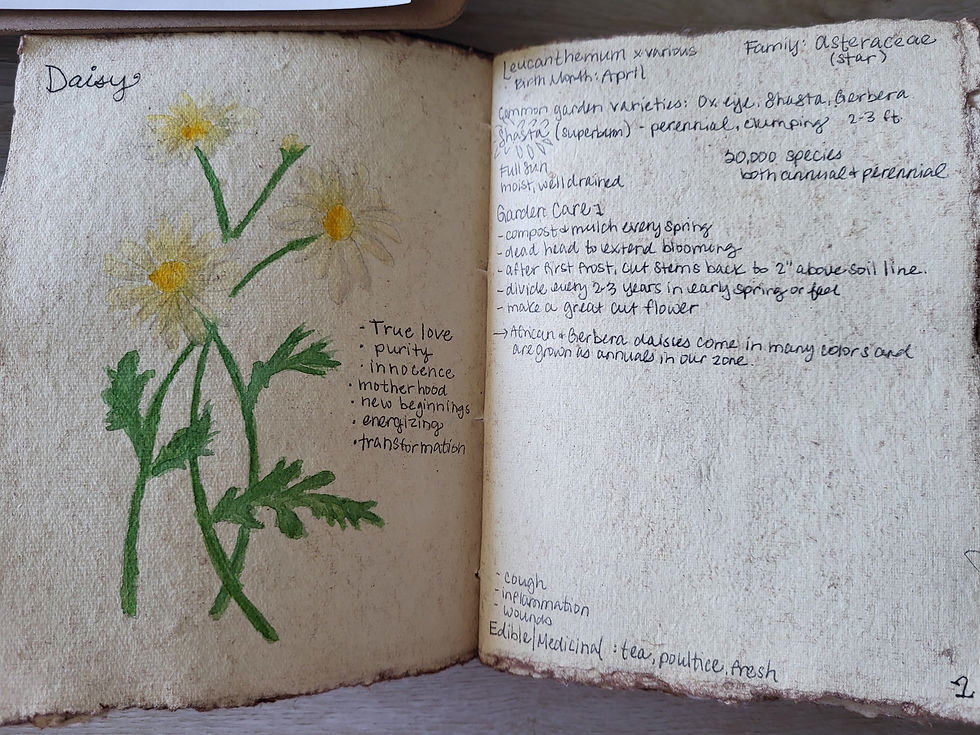
Other herbals I have include this website, the monographs I create on the computer to share with you, purchased journals that I glue pressed plants in with specific meaning such as those grown in my yearly garden or those I collect on family trips with a memory, date, place, and location. I even began a journal full of flowers and their meanings with my attempt at a watercolor of the flower.
Plants are so fun to explore and enjoy! I hope you can experience the same joy I do in exploring, using, and creating with these precious gifts.


Resources
-
Green Pharmacy: The History and Evolution of Western Herbal Medicine by Barbara Griggs
-
The Herbal Academy Pressed Plant Workshop
Scriptures
The scriptures are the word of God. In His word I have found many answers to my questions on health, healing and the body. He is after all the great Creator of this earth, all the gifts on and within it; food, herbs, plants, medicine, water, air, earth, stones, light, and of course our bodies. We were created in His image to "bring to pass his work and his glory". He has given us a guidebook in his scriptures and the words of his prophets, seers, and revelators. Do not overlook this very important source for herbal and natural health education.
-
The Old Testament (KJV)
-
The New Testament (KJV)
-
Pearl of Great Price (Book of Abraham and Book of Moses)