
Extracts are used to preserve fresh herbs that lose potency after drying such as; lemon balm, chickweed, skullcap, St. John’s wort, milky oat. They are easily absorbed into the body, bypassing digestion, are ready instantly, have a longer shelf life, and more convenient to take than other methods. Extracts can be used as dietary supplements, to add flavor to recipes, and for first aid and personal care. They are my favorite way to take herbs.

Solvents
Solvents, also known as menstruum in herbalism, are particular liquids which draw out certain components from plant material. The basic solvents are alcohol, vegetable glycerin and culinary vinegar, though water and oil are also solvents for making tea and herbal oils. Other solvents for external use in cleaners and personal care products would include witch hazel, aloe vera liquid, and distilled vinegar.
Depending on the plant and purpose of use will determine what type of solvent to use for an extract.
Herb Preparation
The type of menstruum and plant material will determine how to prepare it for extraction. Some herbs will need to be extracted with fresh material to preserve the flavor or properties, some need to be dried, but most herbs can be extracted with either fresh or dried material.
Fresh herbs
-
Finely chop or cut directly over jar. Cutting plant material over the jar helps preserve potency since the juices and color left on a cutting board means loss of constituents.
-
Fill sterilized jar ¾ full of fresh chopped herbs
Dry herbs
-
Crush or powder to expose more surface area
-
Fill sterilized jar ½ to ⅔ full
Herbs can be prepared as a single herb or blend several herbs together. Many herbalists recommend extracting plants separately and then combing the extracts to create a blend. Personally, I haven't had any problem with the potency of my blends by combing the herbs together and extracting them as a blend. I find it a matter of preference and what you have at your disposal.


Folk Method
This is the basic way for making an extract. Note that each solvent may have a variation to the extraction process.
-
Pour menstruum to the top of the jar. Leave ¼ inch space of liquid above the herbs. Stir well. Another option is to blend fresh herbs and the solvent in a blender to pulverize the plant material for deeper extraction.
-
Cover with a lid and label with herb used, date, and solvent.
-
Check the next day and top off with more solvent if needed.
-
Store in cool, dark place and agitate regularly.
-
Make sure herbs stay covered with liquid.
-
Allow 4-8 weeks for extraction, which is called maceration. Roots, bark, seeds, and certain herbs will need a longer extraction time.
-
Strain. Bottle and label with name, date and solvent used.
Standardized Method - Ratio
This method is more precise as plant material and liquid are weighed and measured to specific ratios. Follow the same instructions as folk method after the maceration period.
Dry Herbs:
-
1 part powdered herb in grams
-
5 parts solvent in milliliters
Fresh Herbs:
-
2:1 ratio, using jar to fit fully (can even pack it down)
-
Quart jar: 10 oz chopped herb to 20 oz solvent
-
Pint jar: 5 oz chopped herb to 10 oz solvent


Vinegar
Alcohol
Ethanol alcohol is the most common and easiest way to make a tincture. I personally do not consume alcohol for my religious observance and health but do use it as medicine with prudence. If you are concerned with alcohol use as I am, the alcohol will dissipate when added to hot water first.
An extract made from alcohol is called a tincture.
Benefits of using alcohol
-
Extracts a broader range of constituents.
-
Deeper extraction making the tincture more potent.
-
Longer shelf life, 6-10 years or longer.
-
Absorbs faster into the body.
-
Can be applied topically to the body to absorb through the skin and into the bloodstream.
-
Best for extracting resins and tough parts.
Disadvantage of using alcohol
-
Alcohol sensitivity or avoidance.
-
May be too strong for children and elderly.
-
Doesn't extract minerals, mucilage or polysaccharides (medicinal mushrooms) as well.
Tincture Preparation
For basic tinctures use a neutral alcohol that is 80-100 proof. Vodka is usually best since it is flavorless and clear and can easily take on the flavor and color of the herbs used. Brandy, gin, and rum can also be used (though I have never tried these so can't speak from experience).
For extracting resins, gums, and fresh roots a higher proof will work better such as 151-190 proof. This would be Everclear or other grain alcohol.
Use either the folk or standard method without modification.

Vegetable Glycerin
Vegetable glycerin is a clear, sweet tasting, viscous liquid made from plant oils. It has the capacity to break down and remove certain chemicals and preservatives from the body. It is demulcent, emollient, soothing and healing when diluted with distilled water.
An extract made from glycerin is referred to as a glycerite.
Benefits of using glycerin
-
Sweet, making the extract more palatable
-
Better for children and elderly
-
Alternative for those sensitive/avoiding alcohol
-
Can be heated over a short period of time for a faster extraction time.
-
Extracts mucilage, vitamins, volatile oils, and phytochemicals.
-
Best solvent for extracting flowers, aromatic plants, plants high in mucilage including certain roots, berries and seeds (fennel, ginger, dandelion, valerian, burdock, ginseng to name a few).
Disadvantage of using glycerin
-
Isn't able to pull a full range of constituents, making a less potent extract.
-
Doesn't last as long as alcohol, shelf stable 3-5 years, though I've had mine last much longer. *Refrigerating will prolong shelf life.
Glycerite Preparation

Purchase organic, food grade vegetable glycerin. There are a few methods for making a glycerite.
Fresh herb preparation
Herbs with a good amount of water content can be prepared using the folk method with 100% glycerin. The finer the herbs are chopped the better. The herbs and glycerin can also be blended well in a blender then poured into the jar for the macerating time.
Dry plant material preparation
-
25% (1 part) distilled boiled water, pour over herbs in the jar and stir well.
-
75% (3 parts) glycerin, pour to the top of the jar and mix well.
-
Optional: add 10% alcohol to extract deeper and prolong the shelf life.
Fast Method 1
Though the 4-6 weeks of macerating allows for deeper penetration and extraction of plant material, sometimes you may need one much sooner than that and a glycerin preparation can be heated for faster extraction.
-
Prepare the extract using one of the methods above.
-
Place in a crockpot or instant pot with water filled to just below the lid of the jar. Keep on the low or warm setting for 3 days. If using a crockpot keep the water filled to the top as it evaporates.
Fast Method 2
-
Place the herbs in the crockpot with distilled water cover them. Put on low heat for an hour or two.
-
Add the glycerin and leave on low for another 2-3 hours.
-
Turn the crockpot off and let cool, then strain.
-
For a stronger extract, leave everything in the crockpot to macerate for 3 days before straining.
Alcohol Combination
Stephen Buhner says that by adding 10% Vodka to a glycerite it will store indefinitely. I took that idea and put it into practice with my glycerites not only for longer shelf life but to help extract more deeply and get to the constituents that glycerin can't reach and pull.
Glycerite Preparation
Purchase organic, food grade vegetable glycerin. There are a few methods for making a glycerite. If using fresh herbs with a good amount of water content it can be prepared using the folk method with 100% glycerin.

Vinegar
Vinegar extracts are used mainly for culinary and personal care purposes. They enhance the vitamins and minerals extracted from tonic herbs used for nutritive daily supplements. They are also used as a base ingredient for making oxymels.
Use white distilled vinegar to make potent multipurpose cleaners and disinfectant sprays. (For cleaning use only - not to be taken internally)
To make a multi-purpose cleaner dilute the vinegar solution in a spray bottle using half water and half vinegar - 1:1 ratio.
Benefits of using vinegar
-
The best solvent for extracting vitamins and minerals.
-
Easily incorporated into culinary dishes
-
High in vitamins and minerals
-
Makes a good daily supplemnt
-
Renewable resource that can be made at home
-
Beneficial for body and hair care
Disadvantage of using vinegar
-
Taste is hard for some people to take
-
Doesn't extract other constituents as well
-
Shelf life only lasts from 6 months to 1 year (possibly more)

Vinegar Preparation
Ingredients
-
Apple cider vinegar
-
Dried herbs that have been crushed
Warm the vinegar to aid in breaking down constituents for extraction then follow either the folk or standardized method.
Keep in a warm, sunny spot for the maceration period.
Strain
At the end of the maceration period, strain the contents for storage. There are many ways to do this, I'm sharing the method I have found works best for me after trying different ways throughout the years.

Use 100% unbleached cotton muslin.
Either lay a piece over a funnel or sew the cloth into a bag (my favorite method) and place over a measuring container.

Pour extract contents into the muslin.
Twist the cloth around the herbs.

Optional: clip the bag to the side of the container so it can drip for a couple hours before squeezing.

Squeeze all the liquid from the plant material. If particles remain in liquid, strain again through a fresh piece of muslin.
Label, Storage & Use
Once the extract is strained and prepared for storage it is important to label detailed information about your formulation.

Label
Record the following information on your label:
-
Name, include common and botanical
-
Plant parts used or all plants used in a formula
-
Type of menstruum used
-
Date
-
Any other information you'd like
I like to keep my labels clean and simple so I keep the details of my extracts in a binder using this template.

Storage
-
Pour strained extract into a glass jar that will fit the volume as close as possible to limit the amount of oxygen in the jar for a longer shelf life.
-
Keep stored in a cool, dark place.
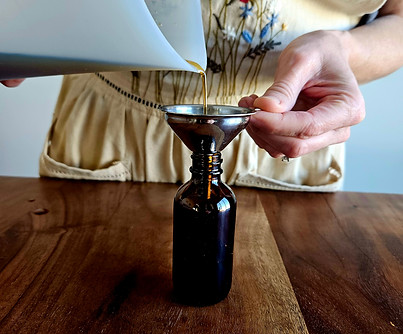
Decant
-
Pour into a small dropper bottles 1-2 oz work best. These can be placed on a counter, drawer, medicine cabinet, cupboard, car, etc. for immediate use.
-
Refill from the larger jars in storage as needed.

Using Extracts
-
Add by the dropperful to a beverage or “shot” of water.
-
Drop directly under the tongue.
-
To remove alcohol from tinctures, add to hot tea or water and let sit 5 minutes uncovered.
-
Strong herbs like cayenne, use one drop at a time.
-
Can be applied topically to areas of concern or on the bottom of the feet to absorb quickly into the body.
-
Add to baths and compresses.
-
Use in cooking for flavor and nutrition.
-
Alcohol extracts are used as a liniment to disinfect wounds and massage into sore, aching bones and muscles.
-
Extracts using witch hazel and aloe vera liquid can be used as skin toners, body sprays and bug repellent.
Dosage
Dosage has many factors to consider including age, weight, body constitution, potency of herbs being used, type of herbs and what they are being taken for.
I personally look at the basic recommendations and then prayerfully determine how to proceed from there. It is best to start with less and add more if needed. I have found in my experience the body is the best healer and will let you know if you need more or less. My mother's instinct has always kicked in when administering to my children and loved ones where I just feel what is right for them.
It is best to use glycerites for children and the elderly.
Tonic and Chronic Conditions
-
Up to 5 dropperfuls, 2-3 times a day
Acute Conditions
-
1-2 dropperfuls, 3-4 times a day
*When administering echinacea or my "sick syrup" for cold/flu I generally use 1-2 dropperfuls every hour until the person is feeling better.
Children
-
Infants: It is recommended to use 1 drop per 5 lbs., 1-3 times a day. I prefer to apply it topically to the bottoms of the feet.
-
Up to 24 lbs., 20 drops (1 ml), 3 times a day
-
24-48 lbs., 1-2 dropperfuls, 3 times a day
Expired Extracts
Extracts can last anywhere from 1 year to indefinitely depending on the solvent and herbs used and how it was stored. Answer these questions to determine if the extract has gone bad and should be discarded.
-
Does it smell like the herb(s) extracted? (no)
-
Does it taste like the herb(s)? (no)
-
Are there particles floating througout? (yes)
-
Has the color changed? (yes)
-
Does it look moldy or have other growths in it? (yes)
Note: Lemon balm and St. John's wort lose potency quicker than other herbs so these are best used within 3 years.

Resources for Further Learning
Should You Make Alcohol-Based Medicine? - Christian perspective from Strangers & Pilgrims on Earth
Herbal Liniments - Mountain Rose Herbs Blog
Tips for Labeling Your Herbal Formulation with Free Label Template - Mountain Rose Herbs Blog