
Juniper
Juniper has long been known as a full body cleanser, physically and emotionally (use aromatics), scrubbing out and removing filth. Combine with a demulcent herb to prevent irritation, such as marshmallow, alfalfa, or purslane.

Juniperus communis
Family: Cupressaceae - cypress
Parts used: berries
Antibacterial
Antimicrobial
Antiseptic
Antispasmodic
Astringent
Carminative
Diuretic
Emmenagogue
Rubefacient
Sedative
Vulnerary
Energetics/Body Systems Affected
Warming
Drying
Urinary
Stomach
Uses
Relives congestion and cleanses the entire body, helping with a myriad of conditions.
Increases urine flow and eliminates congestion, removes waste and strengthens the kidneys, bladder and urinary passages.
Bladder and kidney infection.
Kidney stones with associated pain.
Cramping, muscle aches, and joint pain (topical application).
Cleanses uric acid build up helping with gout and rheumatic issues.
Stimulates digestion, reduces gas, upset stomach, and indigestion.
Cleanses the kidney and liver.
Aids healing of the adrenal glands.
Intestinal worms and parasites
Stimulates the uterus, helping with menstruation in women as well as bloating and water retention.
Clears the mind helping with confusion and exhaustion (use aromatically).
Disinfects and heals wounds, sores, and skin conditions (apply topically).
Crush berries before preparing in one or more of these methods.
Whole berry (soften first with water, chew 1-5 per day for no more than two weeks)
Tea (prepare as a decoction)
Tincture (use alcohol)
Herbal oil, liniment
Salve, ointment, cream
Bath
Powder, capsules or sprinkle (sprinkle over wounds)

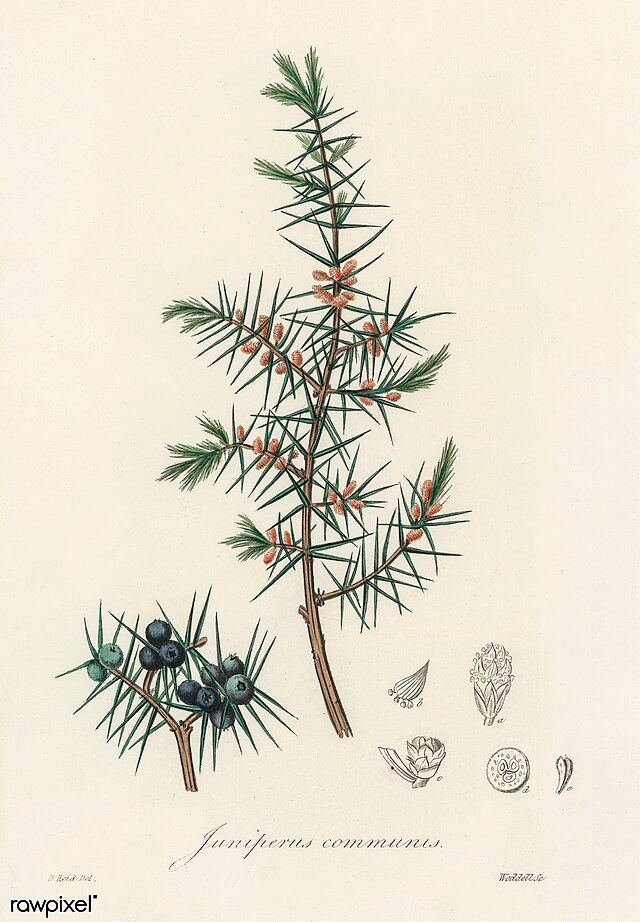
Juniper has over 70 species but communis is the most common one used medicinally. This evergreen has branches are spreading and close, with reddish brown bark, sticky gum, and ½ inch needles. There are both male and female trees, the females produce the berries while the males produce yellow flowers that pollinate the female trees. If you want to plant them in your yard, be sure to plant both the male and female.
Found on dry, sterile hills.
Prefers sandy soil and full sun but adapt to many soil conditions.
Harvest the mature berries, that are blue/black in color, in the fall. Dry thoroughly before use.
Safety
Avoid use during pregnancy but can help encourage contractions during labor. Can be a kidney irritant so avoid taking longer than a six-week period without a break. Avoid completely if any type of kidney damage is present.


