
Comfrey
Other names for comfrey include bruisewort, knitbone, boneset, and healing herb, all which refer to it’s amazing bone healing properties. I have used this herb more times than I can count on broken bones, lacerations, sprains, bone health, and many injuries. It truly is a bone and tissue repairing plant. One of my favorites!

Symphytum offincinale
Family: Boraginaceae - borage, forget-me-nots
Parts used: leaves (blossoms), root
What's in a Name - Symphytum officinale
Symphytum stems from the Greek symphytos meaning untied or sympyo to make whole and phyton meaning plant. Put them together and the meaning implies "The growing together plant".
Offincinale comes from the Latin word officina, in reference to a plant that was grown in monastery gardens or prepared and sold in apothecary shops for the use of healing. These plants were recognized and used as an "official" medicine.
Common Name: Comfrey
From Latin confervere meaning to grow together or knitting together, referencing its use to knit bones and tissue together. The corolla petals of the flowers are also grown together.
Folk Names:
Most of these folk names refer to the ability of comfrey to heal bones and tissue.
Knitbone, nipbone, knitback
Boneset, boneheal
Blackwort, in reference to the color of the root
Bruisewort
Healing herb, miracle herb
Slippery root, gum plant, referencing the properties of the root
Church bells, the flowers of comfrey look like little bells
Ass ear, the leaves are shaped like a donkey’s ear
History
Originated in Eurasia, spread throughout the world by settlers, birds, wind and water.
Used in traditional medicine (whole plant) as well as food raw or cooked.
Ancient Greek physician, Dioscorides mentions comfrey in his Materia Medica, circa 50 BC, as being good for bones, tissue and ulcers.
Ancient Greece used for all types of skin conditions and wound healing.
400 BC, Greece and Roman battlefields use comfrey paste dipped in cloth to wrap around broken bones as it would harden like plaster while repairing the bone and tissue, hence the name, Boneset. It has been used since that time up to WWI for battle wounds.
Middle Ages, comfrey was found in the monastery herb gardens – said to be brought to Europe by the Crusaders.
During the Renaissance. Jean Fernel, French physiologist advocated its use for broken bones.
John Gerard, English herbalist and surgeon, The Herball, or Generall Historie of Plante, 1597, cites comfrey as good for fractured bones and back ache.
In the 17th century, Nicholas Culpepper's The English Physician, claimed if comfrey leaves were boiled with dismembered pieces of flesh in a pot it would join them together. *This was a revolutionary herbal that translated herbal knowledge from Latin to English so the everyday person could be more self-reliant in using herbs in their homes instead of paying high prices to the apothecary and physicians.
19th Century French physician and medical herbalist Henri Leclerc used it for stomach ulcers, lung and gut infections. It was a popular herb among the eclectics (physicians that were branching out from "conventional medicine" and accepting herbs, folk remedies and scientific observation for the best results) of the time.

Alterative
Analgesic
Anti-Inflammatory
Antibacterial
Antifungal
Antispasmodic
Antitumor
Astringent
Cell proliferator
Demulcent/emollient
Expectorant
Hemostatic/styptic
Vulnerary
Energetics/Body Systems Affected
Cooling
Moistening
Secondary - drying
Bone
Skin
Tissue
Respiratory
Energy:
Protection
Restoration
Stability, foundation, structure
Nurturing
Persistence, overcoming challenges
Discipline
Constituents/Nutrients
Allantoin
Alkaloids (mainly the root); pyrrolizidine
Asparagine
Caffeic acid
Chlorogenic acid
Choline
Cobalamin
Inulin
Mucilage
Phenolic acids
Rosmarinic acid
Saponins
Sitosterol
Stigmasterol
Tannins
Triterpenes

Uses
Cell regeneration: bones, muscles, cartilage, all body tissue
Broken, fractured, bruised, deteriorating bone
Bone health, building and repairing
Damaged tissues and torn ligaments inside and out
Strains, sprains, bruises, sports injuries, etc.
Wounds, burns, cuts, abrasions, boils, sores, rashes, skin eruptions, punctures, etc.
Bleeding and hemorrhaging inside and out, first aid
Any type of skin condition such as dry, chapped skin, sunburn, scar tissue, rashes, tags, irritation, chaffing, bites, stings, etc.
Acne, wrinkles, skin and hair care.
Eczema and psoriasis (external soothing while treating internal for root cause)
Cracked nipples, anal fissures and breast pain.
Back, joint and muscle pain and inflammation, gout, rheumatism, carpal tunnel, etc.
General aches and pain
Hernias, varicose veins, inflamed bunions, ulcers, etc.
Any type of inflammation both internal and external
Facial care, tones and firms skin, wrinkles and acne, etc.
Breaks up milk knots in nursing mothers
After birth healing (soaking in a comfrey bath aids cell repair)
Ulcerated organs and tissue, inside and out
Respiratory support; croup, bronchitis, asthma, etc.
Mouth, gum, teeth, and throat infection and issues
Stomach, bowel, intestinal issues and disorders, dry, inflamed digestive tissues (traditional use)
Gangrene, dysentery, lymph congestion, infections, degenerative conditions (traditional use)
Oil, salve, balm, ointment, cream
Bath, soak, steam
Washes, eye, wound, mouth, gargle, etc.
Compress, poultice
Powder, sprinkle, capsules
Extracts, tincture, liniment (glycerine best solvent for internal use, less alkaloids are extracted)
Tea
Cosmetics, facial and skin care, lip balm, hair care, etc.

Comfrey likes moist soil near streams and ponds with dappled sunlight.
Hard to start with seed so it is best propagated by root, divide in mid-late spring or fall for replanting. Plant a one-inch piece of root and cover with about three inches of soil. Keep moist, but well drained. Check your local nursery.
Can be a vigorous growing herb so take care where you plant it. I personally have only seen this happen when the root is disturbed. I have a 5-year-old plant that continually grows in a clump and hasn’t spread.
Snip leaves any time during the growing season, using gloves to protect from stiff hairs. You can also cut the entire plant down when it gets heavy and falls over. It will grow right back, and these are the leaves you want to use internally if you choose to use it that way.
Studies have shown the leaf to be just as potent as the root but there is some that say the roots are more potent. If you want to harvest the roots wait until the plant is done flowering and then dig up, wash well and dry in a dehydrator on the lowest setting. I have only ever used the leaf and flowers tops with amazing results!
Use for composting and mulch. Add to your compost pile or cut the leaves up and sprinkle around other plants for a multi-purpose mulch and fertilizer. You can also make a compost tea by stuffing a jar with leaves packed down and cover with a lid. The leaves will decompose into a “black tea”. Dilute the tea with 10-20 parts water and use to fertilize garden plants. *Just a warning that this tea is pretty stinky so don’t be alarmed.
Safety
Handle plant with care due to the prickly hairs.
Clean wounds thoroughly before applying.
Do not use internally if you have a liver condition, pregnant or nursing.
There is a lot of controversy around the use of this herb for internal purposes. Some say it contains liver damaging chemicals, while others claim it to be perfectly safe when used prudently. Many herbalists love this herb and continue to use it internally for small periods of time to cure an ailment. Dr. Christopher recommends using the second cutting for internal use. Do your research on this herb and use your light of Christ to decide for yourself and family how you will use it. Personally, I love comfrey and have used it internally with wonderful results for acute conditions (not long term).
Wild Comfrey (Hounds Tongue)
There is a species of comfrey that grows in the wild called Hounds Tongue (Cynoglossum officinale), named for the shape of the leaves resembling a dog's tongue. It has similar properties but do to the stronger nature should only be used externally.
Myth/Folklore
Folklore was deeply connected to plants and herbs during the Dark Ages when superstition ruled the heart and mind. Myths and legends usually have truths connected to them so I like to look for symbolism in these historic beliefs, though some are just silly.
Nicholas Culpepper believed every illness, body part and plant were governed by certain planets and zodiac signs, he called it Zodiacal Melothesia, which mapped 12 signs of the zodiac to the body. He placed comfrey as an herb of Saturn under the sign of Capricorn, which connected it to the skeletal system, bones, joints, knees, teeth.
It was believed that planting comfrey near homes could ward off evil spirits.
Travelers carried it for protection, generally placing a leave in the shoe.
It was used as a talisman to bring positive energy and fortune.
Poetry/Literature/Art
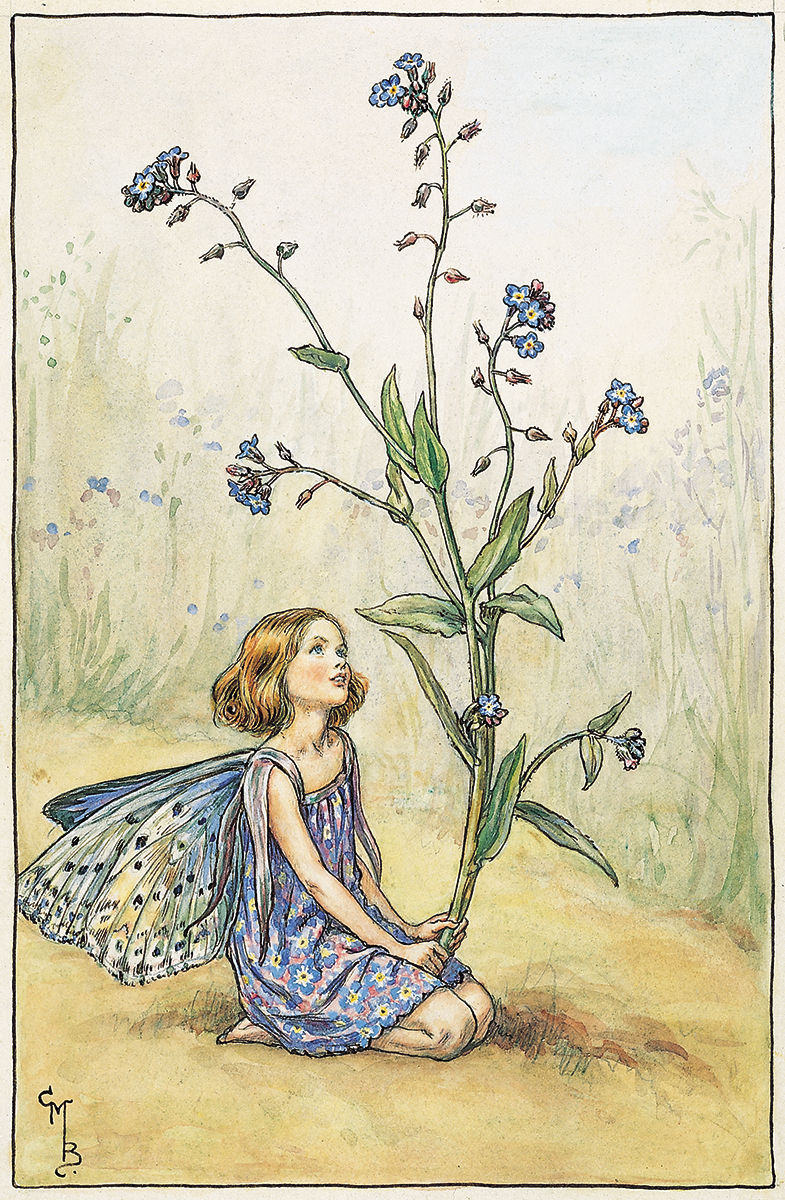
Among the harebells and the grass,
The grass all feathery with seed,
I dream, and see the people pass:
They pay me little heed.
And yet the children (so I think)
In spite of other flowers more dear,
Would miss my clusters white and pink,
If I should disappear.
Flower Fairies Cicely Mary Barker
Quotes
“It does not seem to matter much which part of the body is broken, either internally or externally; comfrey will heal it quickly. It is a great cell proliferate. It grows new flesh and bone alike, stops hemorrhage, and is wonderful for coughs, soothing and healing the inflamed tissues in a most remarkable manner.”
– Advanced Treatise in Herbology by Edward E. Shook, 1978
“Comfrey is one of the finest healers for the respiratory system, especially where there is hemorrhage of the lungs; it has saved thousands of lives.”
-Dr. John Christopher
“Numerous uncontradicted reports of lung cancer cured where all other means have failed and in which the sole treatment consisted of infusion made from the whole green plant and, even in some instances, of infusion made from the powder of the entire plant.” (Handbook of Native American Herbs)
-S. Clymer (Nature’s Healing Agents, 1963)
Personal Experiences
Comfrey and I go way back...
Comfrey Identification & Images
*The Healing Power of Trauma Comfrey by Holly Lucille
100 Plants That Heal: The Illustrated Herbarium of Medicinal Plants, p.47
A Handbook of Native American Herbs by Alma Hutchens, p.69
A Kid’s Herb Book by Lesley Tierra, p. 93
A Modern Herbal by Mrs. M Grieve, p.215 (very detailed)
Backyard Medicine (quotes from old herbals and recipes, with dosages), p.38
Back to Eden by Jethro Kloss, p.121
Botany in a Day, p.142
Breverton’s Complete Herbal p.107
Butterfly Miracles with Herbal Remedies by LaRee Westover, p.53
Essential Herbal Wisdom, p.357
Herbal Health Secrets by Richard M. Lucas, p.67 (case studies)
Homegrown Herbs by Tammi Hartung, p.186
Nutritional Herbology by Mark Pedersen, p.73 (details of actions and constituents)
Practical Herbalism (full list of constituents and actions, preparations and dosages) p. 130
Prescription for Herbal Healing by Phyllis A. Balch, p.51
Prescription for Nutritional Healing by Phyllis A. Balch, p.108
Rodale’s Illustrated Encyclopedia of Herbs, p.104
School of Natural Healing by Dr. John R. Chistopher, p.309, great detail of use and conditions, formulas
The Complete Medicinal Herbal by Penelope Ody, p.101
The Green Pharmacy by James A. Duke
The Green Pharmacy Herbal Handbook by James A. Duke, p.82
The Herbal Academy: Recipes Monographs: Intermediate Herbal Course, p.116
The Herbal Medicine Maker’s Handbook by James Green, p.31
The How to Herb Book by Keith and Gordon, p.24 (specific conditions and how to use)
The Illustrated Encyclopedia of Healing Remedies, p.132
The New Healing Herbs by Michael Castleman, p. 220
The New Age Herbalist by Richard Mabey, p.33
The Way of Herbs by Michael Tierra, p.146
Western Medicinal Plant, p.199


