
Calendula (Pot Marigold)
Calendula is one of my favorites! It's not only beautiful, bright, and happy, it also has amazing healing and nourishing properties for your skin and body. Calendula can be used in the home pharmacy, the first aid kit, the cosmetic counter, the kitchen, and the flower garden.
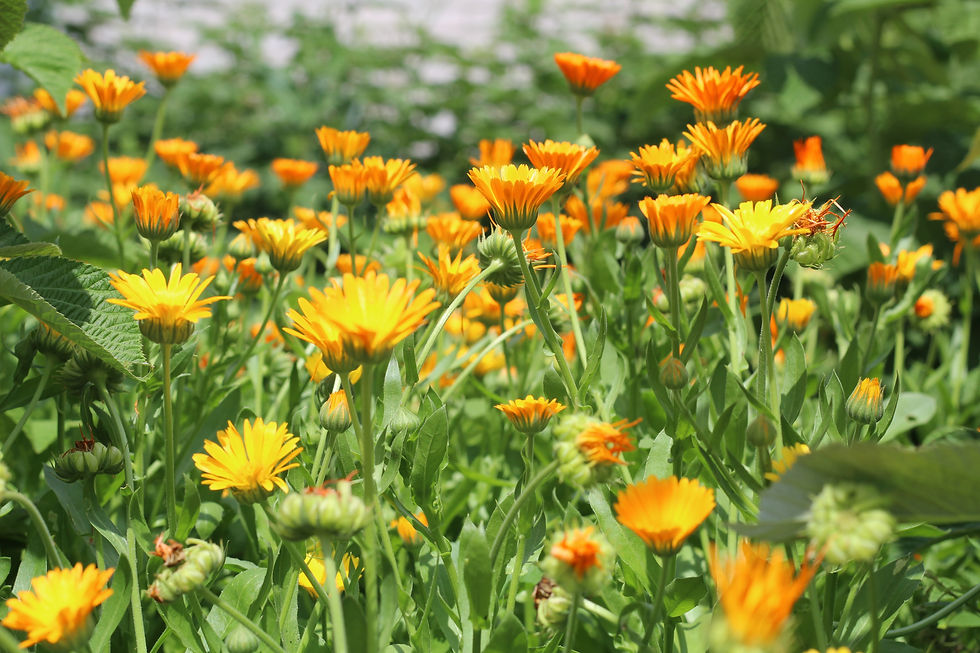
Calendula officinalis
Family: Asateraceae - sunflower, daisy
Parts used: blossoms
What's in a Name - Calendula officinalis
Calendula means flower of all months (calendar). In warm climates it bears flowers by the calendar, once a month, usually during the new moon.
Latin calendae, means little calendar or little clock, connected to the rising and setting of the sun as the flower opens and closes. This name came from the Romans, meaning “Through the months”.
Officinalis comes from the Latin word officina, in reference to a plant that was grown in monastery gardens or prepared and sold in apothecary shops for the use of healing. These plants were recognized and used as an "official" medicine.
Common Name: Pot Marigold
Marigold was derived from joining two old English words "Mary's" and "gold"
Mary always referenced the Virgin Mary and was used as a name for anything useful or beautiful during the Middle Ages.
Gold is in reference to the blossom’s golden color, which poor people presented to the Virgin Mary instead of gold coins.
Folk Names:
Common, English and garden marigold
Pot marigold (for its use in soups and culinary dishes)
Drunkard
Husbandman’s dial
Marybud, Mary’s gold
Prophetic marigold
Summer’s bride, bride of the sun, sun bride, spouse of the sun
Golds – old English poets use of the name marigold
The sun follower
Bull’s eye
Poor mans saffron

History
Originated in Egypt
Native region: South Central Europe & North Africa
Cultivated throughout temperate regions all over the world
Egyptian use for rejuvenation and healing.
Greek and Roman use for culinary and medicine, Romans treated scorpion bites.
Ancient India considered it a sacred herb with flower heads strung as garland and used in temples and weddings.
Arab use as a dye, food coloring, cosmetic and medicine.
12th Century European use for food and medicine, used to dye butter yellow.
Tudor England it became popular as a garden flower for beauty and culinary use.
Middle Ages found in monastery gardens for healing virtues.
Renaissance housewives cultivated it in gardens to flavor and color foods and use for illness and injury.
Traditionally used in Catholic celebrations concerning the Virgin Mary.
Came to America with English settlers.
Used in the Civil War to stop bleeding and help with wound healing.
Analgesic
Antibacterial
Antifungal
Anti-inflammatory
Antimicrobial
Antiseptic
Antispasmodic
Antiviral
Antitumor
Gentle astringent
Cholagogue
Demulcent
Detoxifying
Diaphoretic
Emmenagogue
Emollient Hemostatic
Hepatic
Lymphatic
Menstrual regulator
Tonic
Vulnerary
Energetics/Body Systems Affected
Gently cooling, while also warming
Drying
Bitter
Pungent
Digestive
Female system
Liver
Lymph
Mucus membranes
Skin
Clears stagnation
Constituents/Nutrients
Carotenoids
Enzymes
Flavonoids
Glycosides
Mucilage
Resin
Rutin
Saponins
Salicylates
Sterol
Triterpenes
Volatile oil

Uses
Skin care; cleansing, moisturizing, damaged skin, acne, chapping, scars, sunburn, etc.
Stimulates production of collagen for skin care, wrinkles and maturing skin
Baby care; skin care, diaper rash, cradle, cap, thrush, etc.
Eczema and psoriasis (note this is an aid while the root cause of these conditions are being addressed internally)
First aid; wounds, bruises, cuts, sores abrasions, slow healing wounds, burns, rashes, bug bites and stings, itching, sprains, etc.
Skin ulcers, blisters, abscesses, infection, etc.
Tissue regeneration
After birth healing, perineal tears, postpartum, control bleeding
Post operative healing
Illness, cold and flu, fever, infection, impetigo
Sore throat, oral inflammation, cankers, mouth sores, cold sores, etc.
Toothache, gum disease, mouth issues of all kinds
Conjunctivitis, sore eyes, eye infection and inflammation
Earache and infection
Measles, chicken pox, shingle, skin eruptions (helps to sooth pain and inflammation)
Mild topical pain reliever
Fungal infections; thrush, athlete's foot
Vaginal infection and discharge
Stomach issues, colic
Gut support, digestive health, bowel inflammation, etc.
Heartburn and ulcers
Stagnate liver and sluggish digestion
Gallbladder, liver and kidney support
Lymph congestion, swollen glands, mucus (alongside exercise and stretching to keep lymph moving)
Mild purifying, cleansing effect on the blood
Varicose veins, hemorrhoids, thread veins, etc.
Inflamed and ulcerated conditions both inside and out of the body
Nervousness, anxiety, depression
Tea, drinks
Bath, foot soak, washes, compress, steam
Oil, salve, cream, lotion
Tincture, extract, liniment, culinary vinegar
Syrup, honey
Powder, capsules, sprinkles
Poultice, paste
Gargle, mouthwash
Personal care products, cosmetics
Food: add petals to salads, soups, omelets, butter, ghee, etc.
Dye for food, cloth and hair rinse

Calendula is a self seeding, annual, meaning if seeds are left on the plant they will drop and sprout up the next spring. It grows in clumps rather than spreading by roots and will bloom from early summer until the first or even second frost kills. it.
Sow seeds directly in the ground in the spring about 10" apart or you can find it at the local nursery.
Plant in full sun, light to moderate water
Dead head for non-stop blooming but allow some to go to seed in the fall so it can self seed.
Harvest blossoms when fully open during a dry, sunny day. They will be sticky from the resin.
The roots aid soils, enriching it with lost nutrients. This makes it a wonderful cover crop.
The plant will attract pollinators and friendly bugs while trapping harmful pests which aids and protects plants growing next to it in the garden.
Dosage/Safety
Safe for infants and children (3-4 tsp of weak tea)
Use a consistent application day by day for skin care and wound healing.
Supports the medicinal action of other herbs making it a good formula herb.
Safe for pets (apply salve to cuts and wounds)
Not for internal use during pregnancy.
Part of ragweed family so check for allergies.
Symbolism
Symbolic of Christ as it is the first to bloom and the last to be taken by frost (The First and the Last). The Virgin Mary was the mother of Christ, the gold, truly it is Mary's Gold. It is a soothing, healing balm and heals most ailments just as Christ is the ultimate healer. It could also represent followers of Christ as it follows the sun (The Son).
Other Symbolism:
Emblem of the sun
Prediction
Health and longevity
Fidelity
Emotional Energy:
Cheerfulness
Uplifts the spirits
Joy
Affection
Grace
Counters grief, despair, mourning
Strengthens and comforts the emotional heart and spirit
Clears the head
Myth/Folklore
Folklore was deeply connected to plants and herbs during the Dark Ages when superstition ruled the heart and mind. Through the myths and legends I like to look for the symbolism in these historic beliefs, all pointing to Christlike attributes of light, protection, healing, and the spirit. Some though are just silly.
Dedicated to and associated with the Virgin Mary in Middle Ages (see the name Marigold)
Used to predict the future, like your lover or the weather, petals under the pillow would show you in dreams your lover.
Many believed it held powerful magic.
Herb of the Sun under Leo (Culpepper, 1653)
The flowers were an emblem of love and a symbol of good luck.
Petals sprinkled under the pillow made dreams come true.
Garland was hung over doorways and throughout villages as protection from evil, witches and darkness, enabled one to see fairies. (Light overpowering darkness)
Poetry/Literature/Art
Calendula Identification & Images
A Kid’s Herb Book by Lesley Tierra, p. 145
Breverton’s Complete Herbal p.218
Essential Herbal Wisdom, p.171
Flower Fairies: The Meaning of Flowers
Herbal Skin Care, p.10
Herbs and Spices by Linda Gray, p. 62
Homegrown Herbs by Tammi Hartung, p.179
Practical Herbalism (full list of constituents and actions, preparations and dosages) p. 1114
Revered Roots by LoriAnn Bird p. 108
Rodale’s Illustrated Encyclopedia of Herbs, p.60
Rosemary Gladstar’s Medicinal Herbs: A Beginner’s Guide, p.113
Shakespeare’s Flowers by Jessica Kerr, p. 70
The Artistic Language of Flowers
The Complete Language of Flowers, p.45
The Complete Medicinal Herbal by Penelope Ody, p.43
The Healing Garden, p.111
The Herbal Academy: Recipes Monographs: Intermediate Herbal Course, p.100
The Herbal Kitchen by Kami McBride, p.39
The Herbal Medicine Maker’s Handbook by James Green, p.31
The Language of Flowers by John Ingram, p.9
The Illustrated Encyclopedia of Healing Remedies, p.117,148,187
The New Age Herbalist by Richard Mabey, p.46
The Way of Herbs by Michael Tierra, p.132
The Woman’s Herbal Apothecary, p. 45
Western Medicinal Plants and Herbs, p.133


